Archetypes, Inkblots, and Insight: A Fresh Way to Work with Coaches and Teams
When Coaching Needs a New Lens
If you’ve been coaching for a while, you’ll know the pattern. Clients arrive with goals, challenges, and a fairly well-rehearsed story about themselves. They’ve done personality tools. They know their strengths. They can articulate their development areas.
And yet, something still sits just beneath the surface — harder to access, less structured, but often more revealing.
This is where archetypes and inkblots make an unexpectedly powerful pairing.
Not as a replacement for what you already do, but as a different lens. One that bypasses rehearsed answers and taps into how people instinctively make meaning.
Why Archetypes Still Work
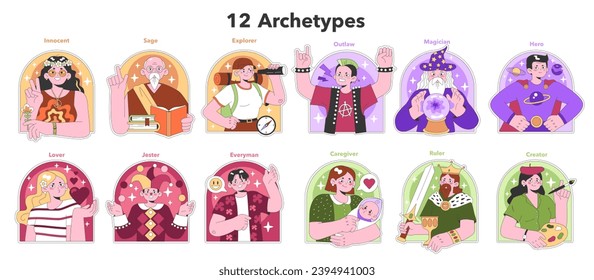
The twelve archetypes, as synthesised by Margaret Mark and Carol S. Pearson from the work of Carl Jung, have endured for a reason.
They’re intuitive.
The Innocent, Explorer, Sage, Hero, Outlaw, Magician, Everyman, Lover, Jester, Caregiver, Creator, and Ruler aren’t just abstract ideas. They’re patterns people recognise immediately — in themselves, in others, and in teams.
What makes them useful in coaching isn’t their structure. It’s their flexibility. People can move between them, blend them, resist them. They’re not boxes. They’re narratives.
And coaching, at its best, is about helping people rewrite their narrative with more awareness.
Where Inkblots Come In
Archetypes give you a language. Inkblots give you access.
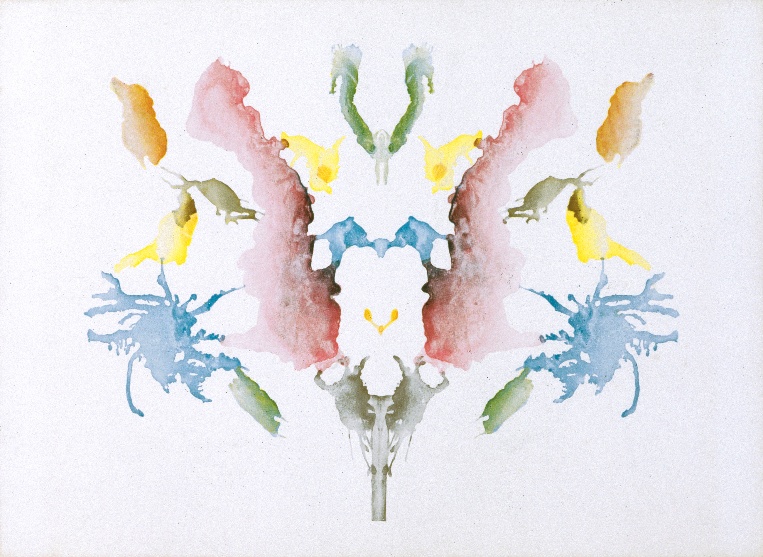
When someone looks at an abstract image and describes what they see, they’re not trying to present themselves in a certain way. They’re responding instinctively.
And in that response, archetypal themes often emerge.
One client might consistently see transformation, mystery, and hidden forces — the Magician at play. Another might focus on structure, control, and hierarchy — the Ruler stepping forward. Someone else might see connection, care, and emotional exchange — the Caregiver or Lover coming through.
The key difference is that this isn’t self-declared. It’s observed.
That subtle shift changes the quality of the conversation.
Moving Beyond Labels into Patterns
As a coach, the goal isn’t to “assign” an archetype. It’s to notice patterns.
If a client repeatedly frames their interpretations around challenge and overcoming obstacles, the Hero narrative might be a useful lens. If they consistently see disruption, rebellion, or breaking norms, the Outlaw might be closer to the surface.
What matters is not the label itself, but what it reveals about how they approach the world.
Are they driven by mastery? Freedom? Connection? Control? Meaning?
Archetypes help you name those drivers in a way that feels accessible and human, rather than technical or abstract.
Using Archetypes in Individual Coaching
In one-to-one work, archetypes can open up conversations that feel less direct, but more revealing.
Instead of asking, “What motivates you?” you might explore the themes emerging from their inkblot responses.
If someone consistently creates narratives of exploration and discovery, you can gently reflect that back. “It seems like you’re drawn to new territory — what happens when things feel too familiar?”
If another client sees order, systems, and authority, you might ask, “Where do you feel most in control, and where does that start to feel challenged?”
The archetype becomes a bridge — a way of talking about behaviour and motivation without making it overly personal or evaluative.
Clients often engage more openly because they’re discussing a pattern, not defending an identity.
Bringing Archetypes into Team Coaching
This is where things get particularly interesting.
In teams, archetypes can help explain dynamics that are otherwise difficult to articulate.
You might notice that one person consistently brings a Creator energy — generating ideas, pushing boundaries — while another operates from a Ruler perspective, focusing on structure and execution. A third might embody the Caregiver, holding the team together relationally.
None of these are better than the others. But when they’re unspoken, they can create friction.
The Creator feels constrained. The Ruler feels things are too chaotic. The Caregiver feels overlooked.
Using inkblot responses as a starting point, you can surface these dynamics in a way that feels neutral and even a little playful.
Instead of saying, “You’re too controlling,” the conversation becomes, “There’s a strong Ruler energy here — how is that helping the team, and where might it be limiting?”
That shift in language lowers defensiveness and increases curiosity.
Archetypes as a Dynamic System
One of the most useful aspects of archetypes in coaching is that they’re not fixed.
A client might operate primarily as a Sage in one context — analytical, reflective, knowledge-driven — and as a Jester in another, bringing humour and lightness to situations.
The goal isn’t to define someone, but to expand their range.
Inkblots can help here by revealing which archetypal patterns come most naturally, and which are less accessible.
If someone rarely expresses a Creator or Explorer energy in their interpretations, it might be worth exploring what experimentation or risk looks like for them in real life. If the Caregiver dominates, what happens when they prioritise their own needs?
The conversation becomes one of balance, not correction.
Why This Resonates with Experienced Coaches
If you’ve worked with structured tools before, you’ll recognise their value — but also their limitations.
Clients often learn how to “answer well.” They understand the language. They anticipate the outcomes.
Inkblots disrupt that pattern.
They introduce ambiguity. They require presence. They invite instinct rather than strategy.
When combined with archetypes, they create a space where insight feels discovered rather than delivered.
For experienced coaches, this can be a refreshing shift. It adds depth without adding complexity. It brings nuance into conversations that might otherwise feel predictable.
A Different Kind of Insight
What makes this approach powerful isn’t that it produces definitive answers.
It’s that it reveals tendencies — how someone naturally interprets, where their attention goes, what themes they return to.
Archetypes give those tendencies a narrative shape. Inkblots provide the raw material.
Together, they create a conversation that feels less like analysis and more like exploration.
A Final Thought
In coaching, the most valuable insights are often the ones that emerge unexpectedly — the moments where a client sees themselves differently, even briefly.
Archetypes and inkblots create the conditions for those moments.
ReadMyBlot is designed as an entertainment and self-reflection experience, not a clinical tool. It draws on themes from established psychological traditions — projective storytelling, the Big Five, and emotional intelligence — but applies them as a narrative framework rather than a validated instrument.
Think of it as a thoughtful conversation about who someone is, grounded in how they actually perceive the world, rather than a formal assessment. The value isn’t in a score or a label, but in the reflection it invites.
And in coaching, that’s often where the real work begins.
Curious what the ink reveals about your clients — or you?
Take the Inkblot Test10 cards · 15 minutes · one portrait as unique as you